


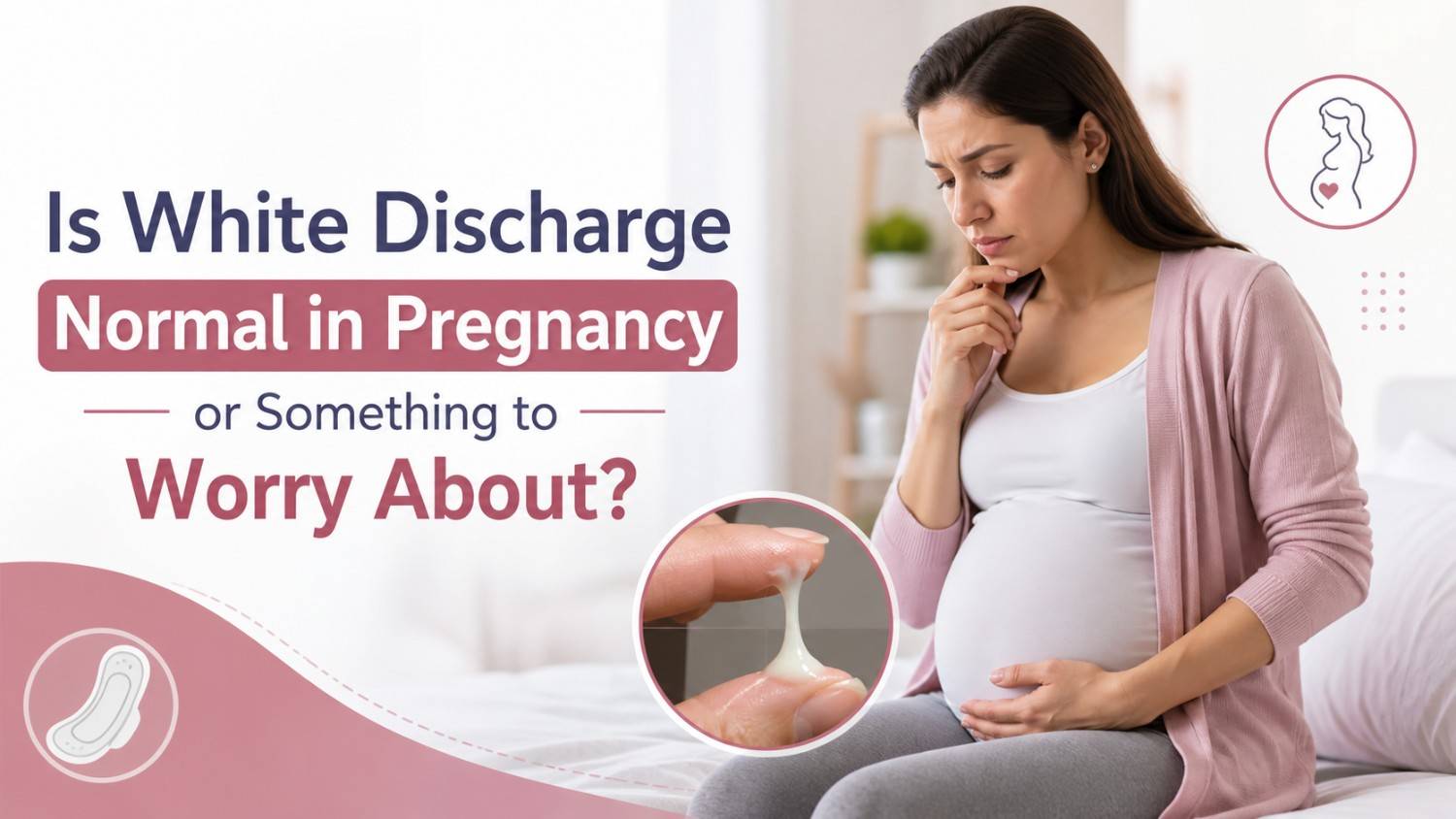
White Discharge Normal in Pregnancy: Finding an unexpected dampness in your underwear is one of those “first-time” pregnancy moments that can send anyone straight to a search engine in a panic. I’ve seen this countless times—moms-to-be worried that something is wrong, only to find out their body is actually doing exactly what it’s supposed to do.
If you are currently staring at a spot on your clothes and wondering if you should call your doctor or just buy more panty liners, this guide is for you. We’re going to skip the medical jargon and talk about what is actually happening down there, how to tell the “good” discharge from the “concerning” kind, and how to stay comfortable for the next nine months.
Is White Discharge Normal in Pregnancy?
The short answer is: Yes, absolutely.
In fact, increased vaginal discharge is often one of the very first signs of pregnancy. From my experience talking to women in the early stages, the change can be quite dramatic. You might go from barely noticing anything to feeling like you need to change your underwear twice a day.
This happens because your body is flooded with estrogen. This hormone increases blood flow to the pelvic area and stimulates the mucous membranes. The result is a surge in discharge known as leukorrhea. Think of it as your body’s natural cleaning system. It’s actually there to protect your birth canal from infection and maintain a healthy balance of bacteria.
Types of White Discharge in Pregnancy
Not all discharge is created equal. To understand what’s going on, you have to look at the “Three Cs”: Color, Consistency, and Care (how it makes you feel).
-
Leukorrhea (The Standard): This is thin, milky white, and mild-smelling (or odorless). This is the “gold standard” for healthy pregnancy discharge.
-
The “Mucus Plug” Snippet: As you get closer to your due date, you might notice thicker, jelly-like clumps. This is often parts of the mucus plug. It can be clear or slightly tinged with pink or brown.
-
Creamy or Lotion-like: Some women describe their discharge as looking like thin unscented body lotion. As long as it doesn’t itch or smell foul, this is usually just a variation of normal leukorrhea.
Causes of White Discharge in Pregnancy
Why does the volume increase so much? There are three main biological “why” factors:
-
Hormonal Surges: Estrogen is the main culprit. It keeps the vaginal lining thick and healthy, which naturally produces more fluid.
-
Protection Mechanism: Your body is incredibly smart. By increasing discharge, it is effectively “flushing out” old cells and bacteria that could potentially travel up to the uterus and affect the baby.
-
Increased Blood Flow: Just like your gums might bleed more easily or your nose might feel stuffy, the increased blood volume in your body makes all your “wet” tissues more active.
Read This Also: Normal Delivery Tips: Secret Ways for Easy Birth (Doctor Advice)
How to Manage White Discharge During Pregnancy
Dealing with constant moisture can be annoying and, let’s be honest, a bit gross. Here is a practical workflow to stay fresh without accidentally causing an infection:
1. Choose the Right Underwear
Stick to 100% cotton. Synthetic fabrics like lace or polyester trap heat and moisture, which is an open invitation for yeast infections. If you’re exercising, change out of your sweaty gear immediately afterward.
2. The Panty Liner Rule
If the flow is heavy, breathable panty liners are a lifesaver. However, avoid scented versions. The fragrances can irritate the sensitive skin “down there” which is already more prone to irritation during pregnancy.
3. The “No-Douching” Policy
This is the most common mistake I see. You might feel “unclean” and want to wash internally, but please don’t. Your vagina is a self-cleaning oven. Douching or using harsh soaps strips away the “good” bacteria (lactobacilli), which actually causes the very infections you’re trying to avoid. Stick to warm water and mild, unscented soap for the outside only.
When to Worry About White Discharge During Pregnancy
While most discharge is harmless, there are specific “red flags” that mean it’s time to stop Googling and start calling your OB-GYN or midwife.
The Comparison Table: Normal vs. Concerning
| Feature | Normal (Leukorrhea) | Concerning (See a Doctor) |
| Color | Milky white or clear | Grey, green, yellow, or bright red |
| Consistency | Thin, watery, or slightly creamy | Thick like cottage cheese or frothy/bubbly |
| Odor | Mild, musky, or no smell | Strong, “fishy,” or foul odor |
| Physical Feeling | No pain or itching | Itching, burning, or swelling |
Signs of Infection
-
Yeast Infection: If the discharge looks like cottage cheese and causes intense itching or redness, it’s likely yeast. It’s common in pregnancy but needs a pregnancy-safe treatment.
-
Bacterial Vaginosis (BV): If the discharge is thin and greyish with a strong fishy smell (especially after sex), it could be BV. This needs to be treated to prevent complications like preterm labor.
-
Leaking Fluid: If you feel a sudden “gush” of clear fluid or a constant trickle that doesn’t feel like discharge, it could be your amniotic fluid. This is an immediate “call the doctor” situation regardless of your due date.
Read This Also: iPhone 18 Pro Colors Explained: Hidden Differences You Must Know
Summary: Trust Your Gut
White Discharge Normal in Pregnancy is one of the common and natural phenomena associated with the body’s health and well-being. The function of the normal white discharge during pregnancy is to help keep the vagina clean and prevent infections.
In most cases, the normal white discharge during pregnancy looks watery, white, or milky with no foul smell. The volume of the discharge may vary from pregnancy to pregnancy; however, it usually becomes thicker and increases in volume.
It is recommended to seek medical advice in case the discharge becomes yellowish, greenish, grayish, or bloody with a strong smell, itching, or pain sensations. These symptoms may indicate infection.
Overall, white discharge normal in pregnancy, there is nothing to worry about when it comes to the presence of normal white discharge during pregnancy unless accompanied by some other symptoms.
FAQs: Real Questions from Moms-to-Be
1. Can white discharge be a sign of labor?
In the final weeks, an increase in thick, mucus-like discharge (sometimes called the “show”) can mean your cervix is thinning and labor is approaching. However, thin white discharge on its own isn’t usually the primary sign of labor.
2. Does it mean I have an STD?
Not necessarily. While some STDs cause discharge, most pregnancy discharge is purely hormonal. If you have any reason to be concerned about exposure, definitely ask for a screen during your prenatal checkup.
3. Why does my discharge smell different now?
Your sense of smell is heightened during pregnancy, and your body’s pH levels change. A slight change in “musk” is normal. A “foul” or “rotting” smell is not.
4. Can I use over-the-counter yeast infection creams?
Most are safe, but you should always check with your doctor before using any medication—even topical creams—during pregnancy.
5. How much discharge is “too much”?
There is no set amount. Some women soak through several liners a day. As long as the quality (color/smell) is normal, the quantity is usually just your unique pregnancy experience.