

Signs of Successful IVF Pregnancy: The “Two-Week Wait” (2WW) is arguably the most emotionally taxing part of the entire IVF journey. After the injections, the scans, and the procedure itself, you are suddenly sent home to simply… wait.
For many of us, every twinge in the abdomen or slight change in mood feels like it could be “the sign.” This article is for anyone currently in that quiet, anxious window, looking for clarity on what a successful embryo transfer actually feels like. From my experience and observations within the fertility community, the reality is often more subtle than what we see in the movies.
Signs of Successful IVF Pregnancy After Embryo Transfer
1. Understanding the “Progesterone Paradox”
Before we dive into the signs, we have to talk about the “Progesterone Paradox.” During an IVF cycle, you are almost always taking progesterone supplements (pessaries, gels, or injections).
Here is the tricky part: Progesterone mimics early pregnancy symptoms. Bloating, breast tenderness, and fatigue are all classic side effects of the medication. This means that having these symptoms doesn’t guaranteed pregnancy, but—more importantly—not having them doesn’t mean the transfer failed.
Read This Also: 1 Month Pregnancy Symptoms – 7 Early Signs Before Missed Period You Shouldn’t Ignore
2. Subtle Signs That May Indicate Success
If an embryo has successfully implanted in the uterine lining, your body begins to produce hCG (human Chorionic Gonadotropin). This shift can cause several early indicators.
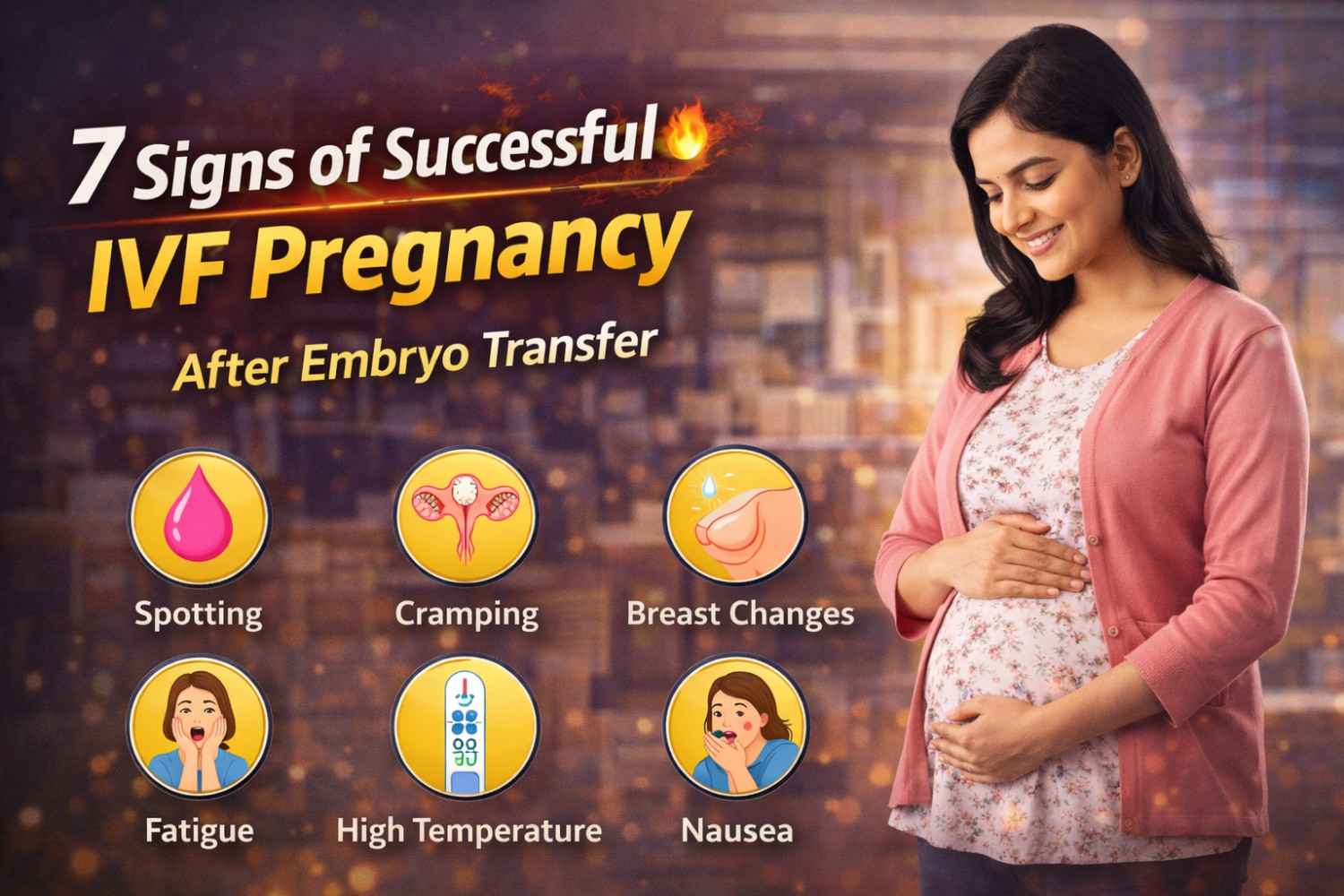
Light Spotting or Cramping
About 6 to 12 days after transfer, some women experience “implantation bleeding.” This is usually very light—pinkish or brownish—and doesn’t last long. It is often accompanied by mild cramping that feels like your period is about to start.
Changes in Breast Sensitivity
As estrogen and progesterone levels rise (hopefully due to a growing pregnancy), your breasts might feel heavier, sorer, or more sensitive to touch. Some women notice the areolas darkening slightly, though this is often more apparent a few weeks later.
Heightened Fatigue
If you feel like you could nap at any moment, even after a full night’s sleep, your body might be working overtime to support a new life. The surge in progesterone levels is the primary culprit here.
Mild Nausea
While “morning sickness” usually kicks in around week six, some women report a “metallic taste” in their mouth or slight waves of nausea just days after the transfer.
3. Real-Life Mistake: The Early Testing Trap
The biggest mistake I see (and have been guilty of myself) is testing too early.
-
The Issue: If you had a “trigger shot” containing hCG, that hormone can stay in your system for up to 10 days. If you test on Day 4 or 5 after a transfer, you might get a “False Positive” caused by the medication, not a pregnancy.
-
The Fix: Wait for the blood test (Beta hCG) scheduled by your clinic. If you must use a home test, wait until at least Day 10 or 11 after a 5-day blastocyst transfer to ensure the trigger shot is gone and the embryo’s hCG is strong enough to detect.
Read This Also: Akshaya Tritiya 2026 Date, Muhurat & What to Buy for Maximum Benefits
4. Comparing Symptoms: What’s Normal?
| Symptom | Is it the Medication? | Is it Pregnancy? | What to do? |
| Bloating | Very Likely | Possible | Drink plenty of water; avoid salt. |
| Spotting | Unlikely | Possible (Implantation) | Wear a liner; notify your clinic if it gets heavy. |
| Cramping | Possible | Possible | Rest; use a warm (not hot) compress. |
| Mood Swings | Highly Likely | Likely | Be kind to yourself; it’s the hormones! |
5. Your Two-Week Wait Survival Routine
Instead of hyper-focusing on every symptom, I recommend building a routine that keeps your mind and body grounded.
-
Hydration First: Aim for 2–3 liters of water. Proper hydration helps manage the bloating caused by IVF meds.
-
The “Walking Meditation”: Gentle movement is better than bed rest. A 15-minute slow walk in the evening helps with blood flow to the uterus without overexertion.
-
Low-Stakes Entertainment: This is not the time for heavy dramas or stressful news. Re-watch your favorite sitcom or read a lighthearted book.
-
The “Symptom Log” (With a Twist): If you must track symptoms, write them down once a day and then close the notebook. Don’t let the search bar be your primary companion.
6. Checklist: When to Call Your Doctor
While most symptoms are part of the process, a few things require immediate medical attention to rule out complications like OHSS (Ovarian Hyperstimulation Syndrome):
-
Severe abdominal pain that makes it hard to stand.
-
Sudden, significant weight gain (more than 1-2kg in 24 hours).
-
Difficulty breathing or a persistent cough.
-
Heavy bright red bleeding (soaking a pad in an hour).
-
Severe dizziness or fainting.
Summary: Trust the Process
The hardest truth of IVF is that there is no “perfect” set of symptoms. I have seen women with every symptom under the sun receive a negative result, and women who felt absolutely nothing—convinced the cycle had failed—go on to have healthy twins.
The presence or absence of signs is not a definitive grade on your pregnancy. Your body is going through an incredible amount of hormonal change, and the only true confirmation is that final blood test. Until then, focus on self-care, stay hydrated, and breathe.
FAQs:
1. When will you feel IVF pregnancy symptoms?
It is estimated that women experience their IVF pregnancy symptoms between 6 – 10 days post-embryo transfer. Early pregnancy signs are evident among some women while others lack any pregnancy symptoms.
2. Is spotting an expected IVF pregnancy symptom?
Yes, spotting can be one of the pregnancy symptoms resulting from implantation. Spotting is normally brief and of a pink or brown color.
3. Why is cramping an expected IVF pregnancy symptom?
Women who undergo fertility treatment can experience cramping due to implantation or side effect of the medications used such as progesterone. Cramps in pregnancy symptoms are mild.
4. How to distinguish IVF pregnancy symptoms from medication symptoms?
Symptoms associated with infertility treatments can easily overlap with pregnancy symptoms. One can never know whether it’s a side effect of fertility drugs or pregnancy symptoms without carrying out a blood test (Beta hCG).
5. No symptoms in IVF pregnancy
Not experiencing symptoms does not mean failure as many women do not exhibit IVF pregnancy symptoms in the first weeks of conception.