

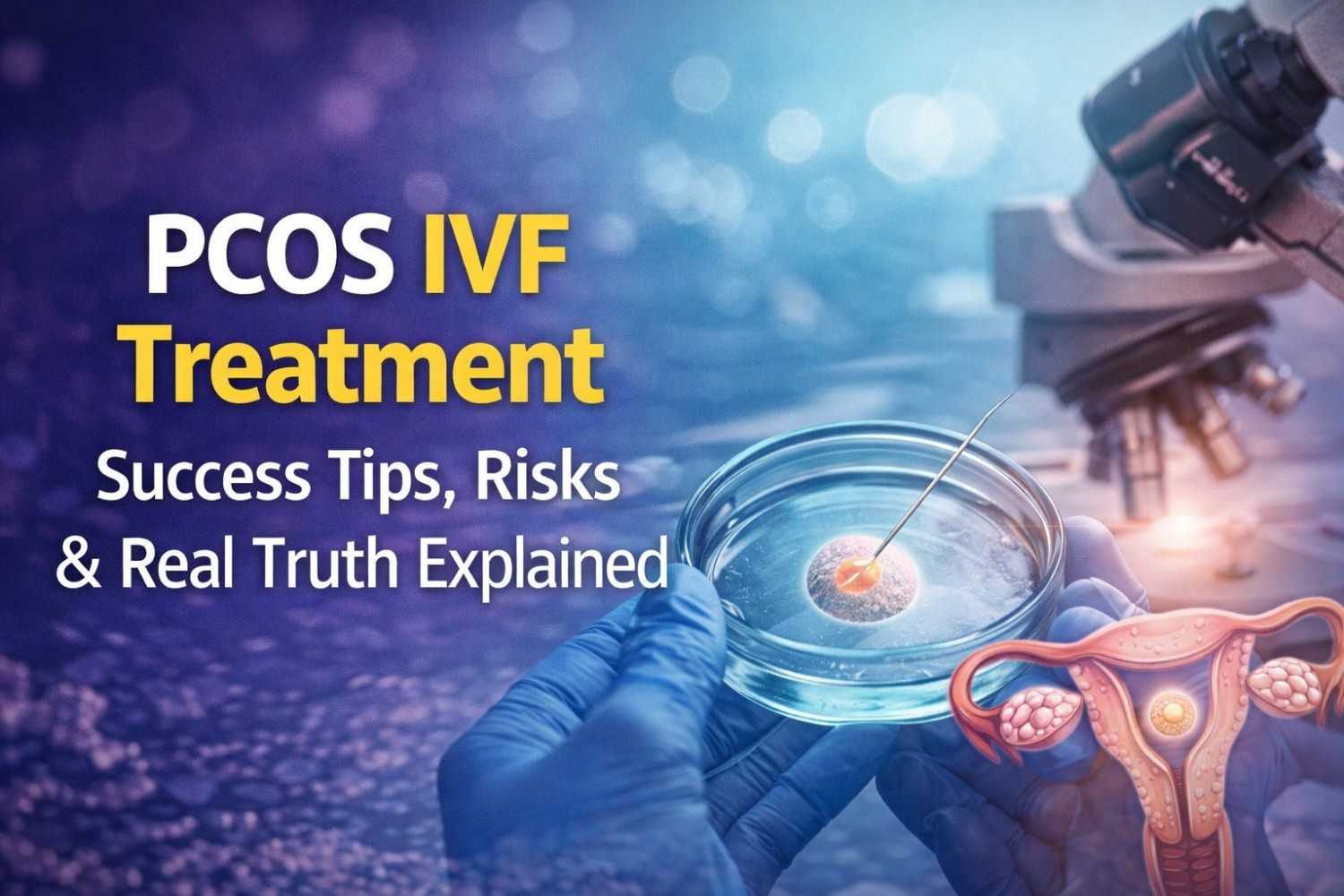
PCOS IVF Treatment : Polycystic Ovary Syndrome (PCOS) is one of the most common reasons women seek help from fertility clinics. If you have been diagnosed, you have likely spent late nights scrolling through forums, wondering if your hormone levels or “string of pearls” follicles mean you will never have a baby.
The good news is that for those with PCOS, IVF isn’t just a “last resort”—it is often a highly effective path to parenthood. However, success isn’t just about luck; it’s about managing specific risks like egg quality and overstimulation. This guide is written for anyone feeling overwhelmed by the diagnosis and looking for a clear, honest look at how IVF works when your body follows its own rules.
Read This Also: Endometriosis and IVF Treatment: How IVF Helps Women Conceive
Why PCOS Changes the IVF Equation
In a typical IVF cycle, the goal is to stimulate the ovaries to produce a good number of eggs. With PCOS, the problem isn’t usually having too few eggs; it’s having too many. While that sounds like a benefit, it presents a unique challenge: balancing quantity with quality.
From what we see in clinical practice, PCOS patients often have a high “egg reserve,” but the hormonal imbalance (higher androgens and insulin resistance) can affect how those eggs mature. The secret to success lies in the preparation before the first injection ever happens.
Step-by-Step Strategy for PCOS Success
1. The Pre-Cycle “Primer”
Success starts months before the egg retrieval. Because insulin resistance is common in PCOS, many specialists recommend starting Metformin or Myo-inositol. Why? Because lowering insulin levels can actually improve the environment where your eggs grow. If we can normalize the internal chemistry first, the IVF medications work much more predictably.
2. Tailored Stimulation (The “Low and Slow” Approach)
PCOS ovaries are like a high-performance engine; if you push the gas pedal (stimulation drugs) too hard, you risk Ovarian Hyperstimulation Syndrome (OHSS). We prefer a “low and slow” protocol. By using lower doses of hormones over a slightly longer period, we aim for a manageable number of high-quality eggs rather than dozens of immature ones.
3. The “Freeze-All” Strategy
In the past, embryos were often transferred just days after retrieval. For PCOS patients, we now frequently recommend a “Freeze-All” cycle. This allows your body to recover from the high hormone levels of stimulation. Transferring an embryo into a “quiet,” natural-feeling uterus a month later significantly increases the chances of implantation and reduces the risk of OHSS.
Read This Also: Vivo T5x 5G Launched 7200mAh Battery, 4K Camera, Price in India
Real-Life Pitfalls and How to Fix Them
Navigating IVF with PCOS often involves hurdles that textbooks don’t always emphasize. Here are the common issues we see and the practical fixes.
| The Mistake | The Reality | The Fix |
| Chasing High Egg Numbers | More eggs don’t always mean more babies. 30 eggs often result in lower quality. | Focus on “optimal” numbers (10–15) through careful medication adjustments. |
| Ignoring Insulin Resistance | High insulin can lead to poor egg maturation. | Discuss Metformin or specific dietary shifts with your doctor 3 months prior. |
| Rushing the Transfer | Your lining may not be receptive immediately after a heavy stimulation. | Opt for a Frozen Embryo Transfer (FET) to give your hormones time to reset. |
| Skipping Lifestyle Prep | Relying solely on the “lab” to do the work. | Focus on low-glycemic eating and moderate movement to stabilize hormones. |
Checklist: Is Your Plan PCOS-Optimized?
Before you start your cycle, check if your medical team has addressed these specific PCOS factors:
-
Hormone Baseline: Have your LH/FSH ratios and testosterone levels been checked recently?
-
Insulin Check: Have you had a fasting insulin or A1C test?
-
OHSS Prevention: Is your doctor using an antagonist protocol (usually safer for PCOS)?
-
Supplement Support: Are you taking Myo-inositol or CoQ10 to support egg quality?
-
Trigger Shot Plan: Is there a plan to use a Lupron trigger instead of HCG to lower hyperstimulation risk?
Final Takeaway
The success rate for IVF in PCOS patients is actually very encouraging—often higher than for those with other types of infertility because egg supply is rarely the issue. The journey requires patience and a doctor who treats your ovaries with the “handle with care” approach they deserve. If you focus on egg quality over quantity and allow your body time to rest between retrieval and transfer, your chances of a healthy pregnancy are excellent.
FAQs
1. What is PCOS IVF Treatment?
PCOS IVF Treatment is a fertility process where eggs are retrieved and fertilized outside the body. Women with PCOS often respond well to IVF because they have a higher egg reserve, improving chances of pregnancy.
2. Is IVF successful in PCOS patients?
Yes, PCOS IVF Treatment has a good success rate compared to other infertility conditions. With proper hormone balance, lifestyle changes, and medical support, many women with PCOS achieve successful pregnancy through IVF.
3. Why is egg quality important in PCOS IVF Treatment?
In PCOS IVF Treatment, having many eggs does not always mean better results. Hormonal imbalance can affect egg quality, so doctors focus on improving quality rather than just increasing the number of eggs.
4. What is the freeze-all strategy in PCOS IVF Treatment?
The freeze-all strategy means embryos are frozen and transferred later. In PCOS IVF Treatment, this helps reduce risks like OHSS and improves chances of implantation in a stable hormonal environment.
5. How can I improve success in PCOS IVF Treatment?
You can improve PCOS IVF Treatment success by managing insulin levels, following a healthy diet, taking supplements like Myo-inositol, and following your doctor’s personalized plan carefully.