

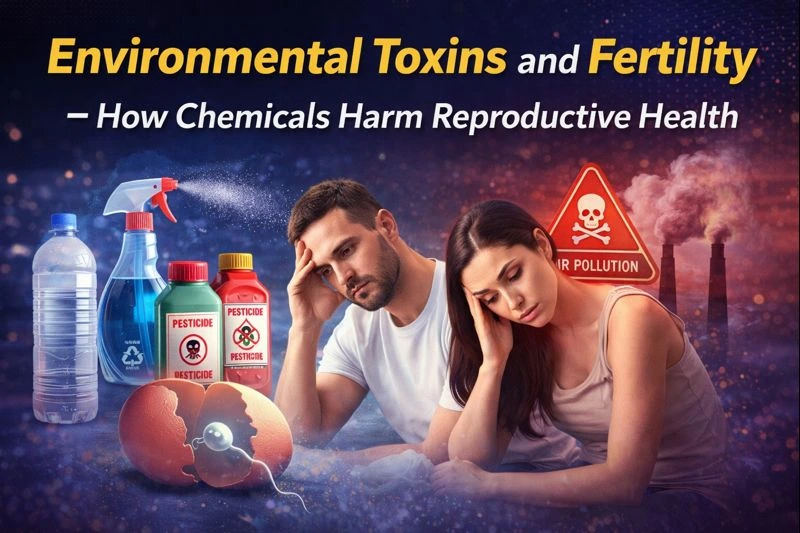
Environmental Toxins and Fertility: In today’s fast-paced life, we unknowingly come into contact with many chemicals and pollutants that gradually harm our bodies. The most profound impact of these environmental toxins is on our fertility—in both men and women.
Plastics, polluted air, pesticides, and everyday chemicals can disrupt hormonal balance, leading to difficulties in conceiving. This is why awareness of this issue has become extremely important today.
How do environmental toxins affect fertility?
Some chemicals disrupt our body’s hormonal system. These are called endocrine disruptors.
- They alter the way hormones function.
- They affect ovulation in women and sperm production in men.
Where are they found?
- Plastic bottles and containers (BPA)
- Cosmetics and personal care products (Phthalates)
- Pesticides
2.Heavy Metals
Heavy metals like lead, mercury, and cadmium can accumulate in the body and cause serious harm.
- They can reduce sperm count and quality in men.
- They can affect ovulation in women.
- They can increase the risk of recurrent miscarriages.
3.Air Pollution
Polluted air harms not only the lungs but also reproductive health.
- Delayed conception
- Increased risk of miscarriage
- Hormonal imbalance
4. Pesticides and Fertility
Pesticides used on fruits and vegetables can enter the body and disrupt hormonal balance. Long-term exposure can reduce fertility.
5.Household Chemicals
Chemical cleaners, paints, and solvents used in the home can also harm fertility, especially if used daily.
How to identify if environmental toxins are affecting you? Some common signs may include:
- Irregular periods in women
- Difficulty conceiving for a long time
- Low sperm count in men
- Frequent fatigue or hormonal problems
- If these symptoms persist, do not take them lightly.
- Detoxify your life and improve fertility
1.Clean up your diet
- Opt for organic fruits and vegetables
- Avoid processed and packaged foods
- Eat foods rich in antioxidants (green vegetables, fruits, nuts)
2.Make your home chemical-free
Use natural alternatives instead of chemical cleaners
(such as vinegar, baking soda, lemon)
3.Keep your home’s air clean
- Use an air purifier
- Avoid artificial fragrances (room fresheners, scented candles)
- Increase ventilation by opening windows
4.Reduce plastic use
- Use glass or stainless steel containers for food and drinks
- Do not put plastic in the microwave
5.Choose personal care products wisely
- Opt for chemical-free or natural products
- Use mineral-based sunscreen instead of chemical sunscreens
How does reducing toxins improve fertility?
- When the body has fewer toxins:
- Hormone balance improves
- Ovulation and sperm quality improve
- The chances of conception increase
- The body repairs itself more effectively
Why is professional help necessary?
Consult a fertility specialist
If you have been trying to conceive for a long time, consulting a fertility expert can be the right step. They can advise you on reducing toxin exposure based on your specific situation. Connect with our experts (CTA)
Success Stories
Many couples have seen positive results in just a few months by making simple lifestyle and dietary changes and reducing chemical exposure. This proves that even small changes can make a big difference.
Conclusion
Environmental toxins silently affect our fertility. But the good news is that with the right information and actions, we can significantly reduce this impact.
Start paying attention to your lifestyle, diet, and environment today. It’s a great investment not only for your fertility but for your overall health.