


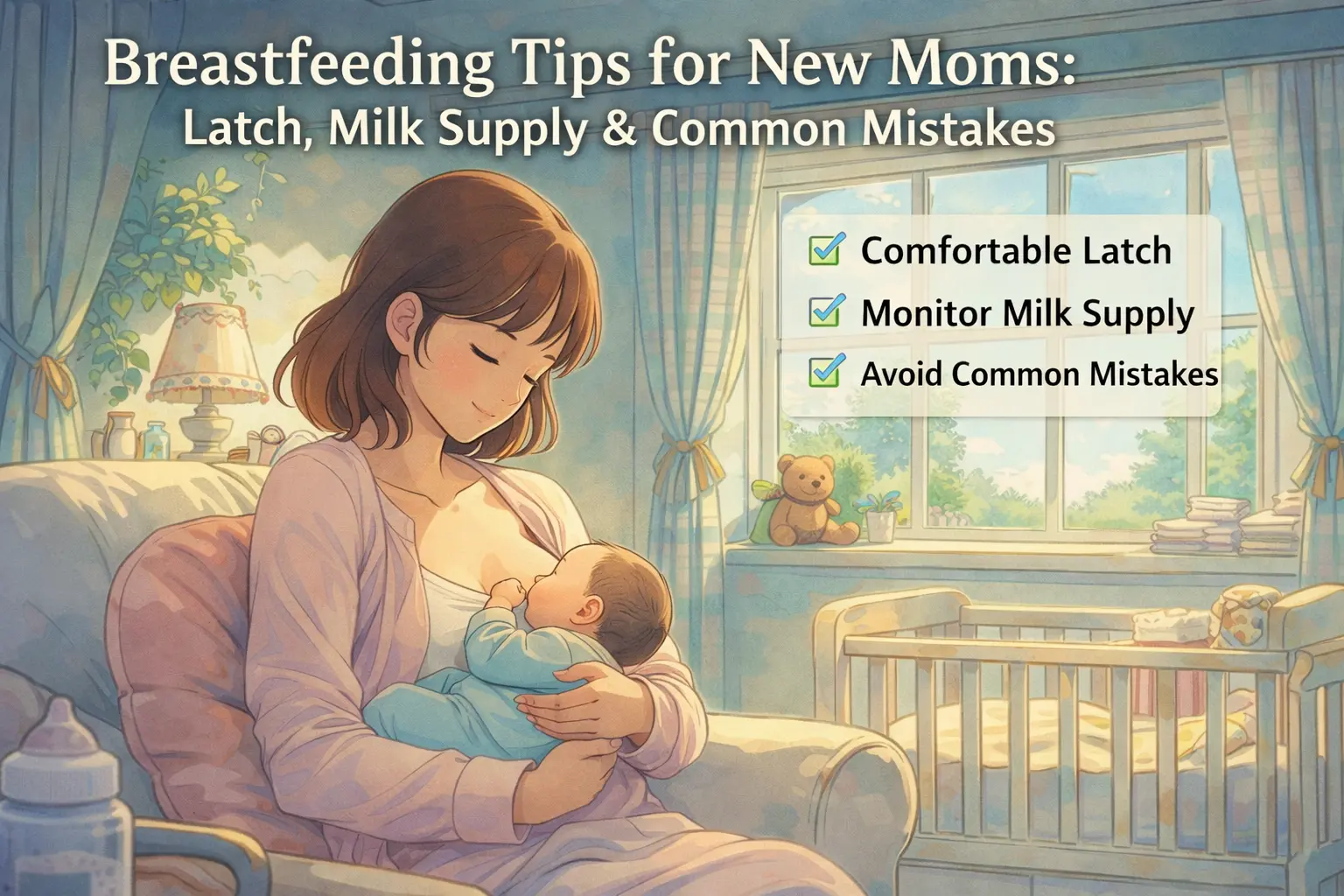
Breastfeeding Tips for New Moms: Breastfeeding can feel surprisingly hard at the start—even if you’ve read a lot about it. Most new moms I’ve met (and what I’ve seen in real life) don’t struggle because they “can’t” breastfeed; they struggle because nobody shows them the small, practical details: how to latch comfortably, what “enough milk” actually looks like, and how to handle sore nipples or a fussy baby at 2 a.m. This guide is for new moms who want simple, real-world steps to feed their baby and protect their own body and confidence.
The first mindset shift: breastfeeding is a skill, not a talent
In the early days, you and your baby are learning together. It’s normal for feeds to feel clumsy at first. What matters most is a deep, comfortable latch and frequent milk removal (baby feeding often, or pumping if needed). Those two things drive supply and prevent many common problems.
Step-by-step: getting a comfortable latch
1) Set up your body first (it changes everything)
Before baby latches, I always check three things:
-
My back is supported (pillow behind me).
-
Baby is brought to me, not me leaning toward baby.
-
Baby’s whole body faces me (ear–shoulder–hip in one line).
Why this matters: when you lean forward, your shoulders and neck tense up, and baby tends to slip to a shallow latch.
2) Aim the nipple toward the baby’s nose
This sounds odd, but it helps baby open wide. When baby opens wide, bring baby in close quickly. A good latch usually feels like strong tugging, not pinching.
Signs of a good latch
-
Baby’s mouth is wide, lips flanged (like “fish lips”)
-
Chin touches the breast, nose is free or lightly touching
-
You hear/see steady swallowing after the first minute
-
Pain eases after the first 20–30 seconds (mild tenderness can be normal early on)
If it hurts sharply the whole time: break suction gently (clean finger in corner of mouth) and relatch. Don’t “push through” pain—pain is usually a latch issue, and a bad latch can lead to cracks fast.
A simple feeding routine for the first weeks
I’ve found this routine reduces stress because it gives you a plan without over-timing everything.
-
Offer the first breast until baby slows down or releases.
-
Burp and switch sides if baby still seems interested.
-
Watch the baby, not the clock. Some feeds are 10 minutes, some are 40.
-
If baby is sleepy and not feeding well, try diaper change + skin-to-skin and offer again.
Quick “Is my baby getting enough?” checklist
Use this practical checklist instead of guessing:
-
Baby seems satisfied after some feeds (not all—cluster feeding is real)
-
Wet diapers are gradually increasing over the first week
-
Baby is alert at times, not constantly lethargic
-
You hear swallowing during feeds
-
Weight gain is tracked by your pediatrician (this is the most reliable)
If you’re worried, it’s worth getting a weighted feed or a latch check with a lactation consultant. It can save weeks of stress.
Common real-life mistakes (and how to fix them)
Mistake 1: Shallow latch → sore nipples
Fix: Re-latch with baby’s chin leading, mouth wide, and baby pulled in close. Try laid-back nursing or side-lying if you’re tense.
Mistake 2: Skipping feeds to “build milk”
Fix: Milk supply generally increases with more removal, not less. If baby sleeps long and your breasts feel very full, hand express a little for comfort.
Mistake 3: Only pumping or only nursing when things are tough
Fix: Use a combo approach when needed. If latch is painful, pump briefly to protect supply while you work on latch, then return to nursing.
Mistake 4: Treating every fuss as hunger
Fix: Check basics: diaper, burp, temperature, need for comfort. Babies also cluster feed in the evenings—it’s normal and not a sign you’re “empty.”
Handling common challenges
Engorgement (very full, tight breasts)
Warmth before feeding, gentle breast massage, and softening the areola (hand express a little) can help baby latch. Cold packs after feeds can reduce swelling.
Blocked duct (tender lump)
Feed frequently, rest, vary positions, and use gentle massage. If you develop fever, flu-like symptoms, or worsening redness, contact a clinician—mastitis needs prompt attention.
Low supply worries
Sometimes it’s real; often it’s perception. The most helpful first steps are: check latch, feed/pump more often, and ensure you’re eating and drinking enough. If needed, a professional can guide safe options.
Takeaway
Breastfeeding gets easier when you focus on the fundamentals: comfortable latch, supportive positioning, and frequent milk removal. If something feels off—sharp pain, poor weight gain, constant frustration—get help early. One good latch check can change everything.
FAQs (real doubts new moms ask)
Q1. What are the best breastfeeding tips for new moms?
The best breastfeeding tips for new moms include focusing on a deep latch, comfortable positioning, frequent feeding, and seeking help early if pain or stress continues.
Q2. How can I tell if my baby is breastfeeding properly?
Proper breastfeeding usually shows a wide mouth latch, steady swallowing sounds, and a relaxed baby after feeding. Pain should reduce after the first moments.
Q3. Is pain normal while breastfeeding?
Mild tenderness can be normal initially, but sharp or ongoing pain usually means latch or positioning needs correction. This is a key breastfeeding tip for new moms.
Q4. What should I do if I feel my milk supply is low?
Before assuming low supply, check latch, feed more frequently, and stay hydrated. Many new moms experience supply anxiety that improves with guidance.
Q5. When should a new mom seek help with breastfeeding?
If pain continues, baby is not gaining weight, or feeding feels constantly stressful, a lactation consultant or doctor should be consulted promptly.
Read This Also: Baby Development Milestones 0–12 Months: Month-by-Month Guide for New Moms
Read This Also: Nothing Phone 4a Pro Leaks: 5080mAh Battery, 50W Charging & Price Details