

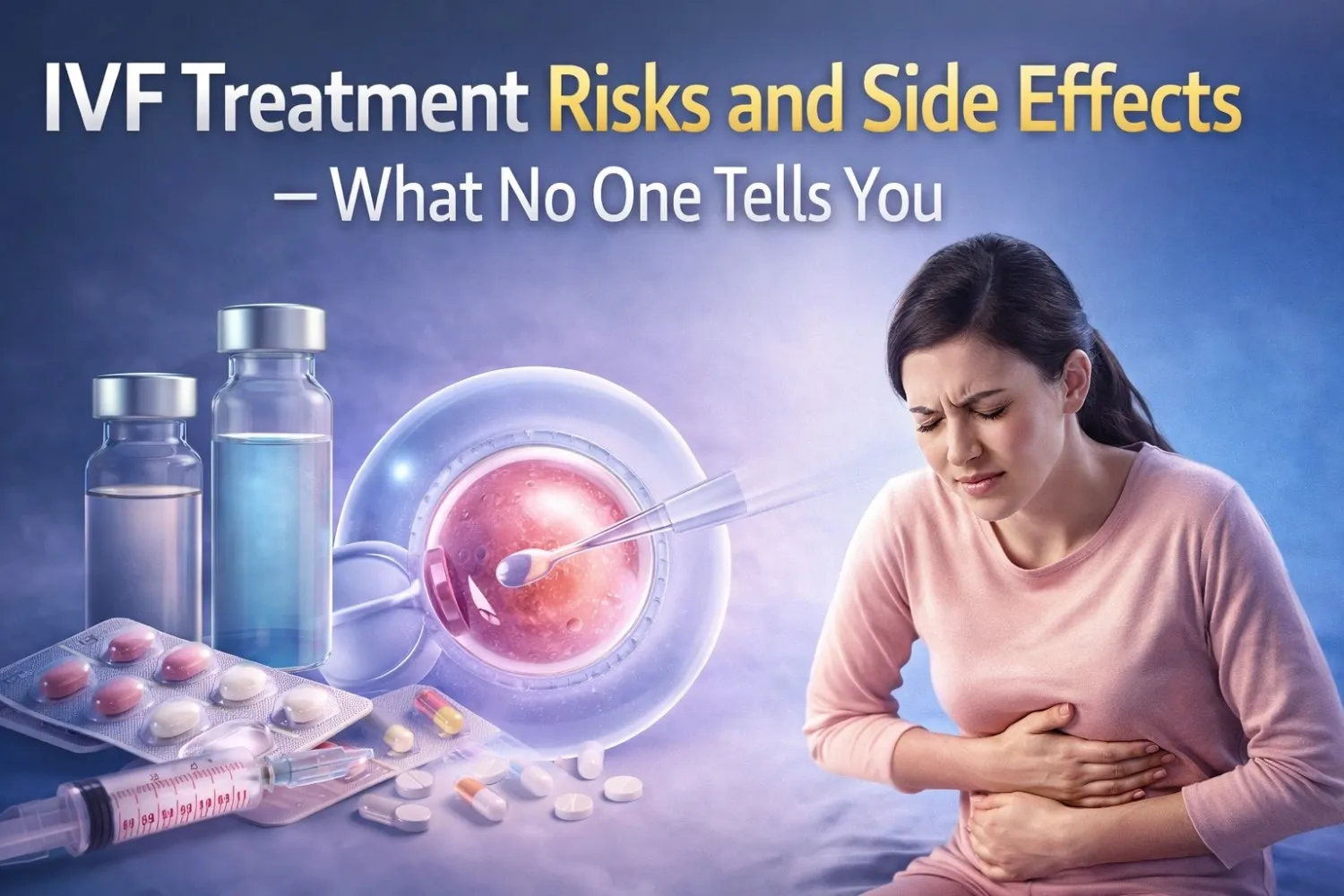
IVF Treatment Risks And Side Effects
IVF can feel like a lifeline—until the side effects show up and nobody told you what “normal” actually looks like. I’ve seen people go into IVF thinking it’s just “some injections and an embryo transfer,” and then feel blindsided by bloating, mood swings, pain, anxiety, and a hundred small decisions that affect safety and comfort.
Read This Also: IUI vs IVF: Which Fertility Treatment Is Better? Which One Should You Choose?
This guide is for couples and individuals in India, the US, and the UK who want a clear, practical understanding of IVF risks and side effects—what can happen, why it happens, what’s common vs concerning, and how to reduce avoidable problems. I’ll keep it simple, realistic, and focused on what you can do.
First, a quick reality check: IVF is a process, not one event
Most side effects don’t come from “IVF” as a single thing. They come from specific steps:
-
Hormone stimulation (daily injections to grow multiple eggs)
-
Egg retrieval (a procedure under sedation/anaesthesia)
-
Embryo transfer (usually quick, but medications continue)
-
Luteal support (progesterone/estrogen after retrieval or transfer)
-
Early pregnancy phase (if successful—your body is still reacting)
Knowing which phase you’re in makes it easier to predict what you might feel and when to seek help.
Step-by-step: IVF Treatment Risks And Side Effects you should expect (and why)
1) Hormone stimulation side effects
This is when most people feel the biggest change.
What you may notice
-
Bloating and heaviness in the lower abdomen
-
Breast tenderness
-
Mood swings, irritability, anxiety
-
Fatigue and poor sleep
-
Headaches
-
Mild weight gain (often fluid retention, not fat)
Why it happens
Your ovaries are working overtime. They enlarge as follicles grow, and hormone levels rise fast. Even people who are usually calm can feel emotionally “different” during stimulation—this isn’t weakness; it’s biology plus stress.
Read This Also: What Is Simhastha Kumbh? History, Meaning & Spiritual Significance Explained
Practical tips that actually help
-
Wear loose clothing and switch to smaller meals (bloating is real).
-
Keep hydration steady, not extreme (too little and you feel worse; too much can also be uncomfortable).
-
Plan fewer social obligations during peak stimulation days.
-
Keep a daily note: symptoms + medication time + how you slept. It helps when you talk to your clinic.
2) Egg retrieval side effects and risks
Egg retrieval is usually short, but it’s still a procedure.
Common after-effects (usually 24–72 hours)
-
Cramping like a strong period
-
Spotting
-
Shoulder pain (from gas/positioning sometimes)
-
Grogginess from sedation
-
Constipation (very common after sedation + progesterone)
Risks to know
-
Bleeding (rare, but can happen)
-
Infection (rare, but possible)
-
Injury to nearby organs (very rare, but a known risk)
My “retrieval day” routine
-
Don’t schedule work for the same day.
-
Have a light meal plan ready (soups, rice, yoghurt—whatever you tolerate).
-
Ask your clinic what pain relief is allowed and when.
-
Use a stool softener if constipation starts—don’t wait until day 3 when you’re miserable.
3) OHSS (Ovarian Hyperstimulation Syndrome): the big one to understand
OHSS is one of the most important IVF risks. Most cases are mild, but severe OHSS can be serious.
What mild OHSS can feel like
-
Increasing bloating
-
Abdominal discomfort
-
Nausea
-
Rapid weight gain over a couple of days (mostly fluid)
Red-flag symptoms (call your clinic urgently)
-
Severe abdominal pain
-
Shortness of breath
-
Reduced urination
-
One-sided leg swelling or chest pain
-
Severe nausea/vomiting that prevents fluids
-
Sudden significant weight gain in a short time
Why it matters
OHSS involves fluid shifts in your body. In severe cases, it can lead to dehydration, blood clots, and breathing issues. Clinics often adjust medication doses, use different trigger injections, or freeze embryos (“freeze-all”) to reduce risk—especially in high responders (like many PCOS patients).
4) Side effects from progesterone and other support meds
Many people blame IVF when the real culprit is progesterone.
Common progesterone side effects
-
Bloating, constipation
-
Breast tenderness
-
Mood changes
-
Sleepiness
-
Vaginal irritation (with suppositories)
-
Pain or lumps (with injections)
Practical comfort fixes
-
Rotate injection sites properly and use warm compresses after.
-
If suppositories irritate you, ask if a different brand or form is possible.
-
Treat constipation early (water + fibre + gentle movement + stool softener if approved).
5) Emotional and relationship side effects (often the hardest part)
This part doesn’t get enough respect. IVF can create:
-
Constant “waiting mode”
-
Sleep issues
-
Conflict about finances or timelines
-
Social withdrawal (baby showers, family questions)
-
Guilt (especially if results aren’t good)
What helps in real life:
-
Agree on a “no IVF talk hour” daily.
-
Decide who handles updates to relatives (one person only).
-
If your clinic offers counselling—use it early, not after burnout.
Less talked-about risks (but you should know)
Multiple pregnancy
If more than one embryo is transferred, the chance of twins/multiples increases. That can sound exciting, but it raises risks like preterm birth and complications. Many clinics now prefer single embryo transfer when appropriate.
Ectopic pregnancy
Rare, but possible even with IVF. This is one reason clinics monitor early pregnancy carefully.
Ovarian torsion
An enlarged ovary can twist and cause severe pain. It’s uncommon, but it’s an emergency if it happens.
Infection and allergic reactions
Rare, but anyone can react to medications or develop an infection after procedures.
Long-term cancer risk worries
People often ask if fertility drugs “cause cancer.” The research is complex and depends on individual history. If you have personal or family cancer risk, or conditions like endometriosis, talk to your specialist. Don’t rely on social media claims—ask for a personalised risk discussion.
Save checklist: “Is this normal or should I call?”
Use this during stimulation and after retrieval.
Usually normal (monitor at home)
-
Mild bloating and cramps
-
Light spotting after retrieval
-
Breast tenderness
-
Mood swings and fatigue
-
Mild nausea that improves with fluids and rest
Call your clinic within 24 hours
-
Fever, chills, foul-smelling discharge
-
Pain that is worsening, not improving
-
Vomiting that lasts more than a day
-
Increasing belly swelling that feels tight
Seek urgent care / emergency help
-
Difficulty breathing
-
Chest pain
-
One-sided leg swelling
-
Severe abdominal pain
-
Very low urine output
(Always follow your clinic’s specific instructions—some centres prefer you call first even for mild symptoms.)
Real-life mistakes I see (and how to avoid them)
Mistake 1: “I’ll push through, it’s probably normal.”
Fix: Decide in advance what symptoms trigger a call. When you’re anxious, you’ll underplay pain.
Mistake 2: Waiting too long to manage constipation.
Fix: Retrieval + progesterone slows the gut. Early action saves a week of discomfort.
Mistake 3: No plan for work/travel during key days.
Fix: Keep stimulation and retrieval week flexible if possible. Stress makes everything feel worse.
Mistake 4: Comparing your cycle to someone else’s.
Fix: Responses vary widely. Track your symptoms and ask your clinic what’s expected for your protocol.
Takeaway: IVF side effects are real, but many risks are manageable
Most people go through IVF with discomfort rather than danger. The safest outcomes usually happen when you:
-
understand what phase you’re in,
-
track symptoms daily,
-
manage small problems early (hydration, constipation, rest),
-
and treat red flags seriously instead of “waiting it out.”
A good clinic won’t shame you for calling. In IVF, it’s better to ask early than regret late.
FAQs (real questions people ask)
Q1. What are IVF treatment risks and side effects?
IVF treatment risks and side effects include bloating, pain, fatigue, mood changes, and rarely serious problems like OHSS.
Q2. Is IVF dangerous?
IVF is generally safe when monitored properly, but some risks do exist.
Q3. What is the most serious IVF side effect?
Severe OHSS is considered the most serious side effect.
Q4. How long do IVF side effects last?
Most side effects last a few days to a week.
Q5. When should I call my doctor during IVF?
If you have severe pain, breathing trouble, fever, or heavy swelling.