


Kid Nutrition for Toddlers: If you’re feeding a toddler in the US or UK, you’ve probably had at least one meal where you served something “healthy,” they stared at it like you’d offered a shoe, and you ended up negotiating over three bites. I’ve been there. Most toddler nutrition stress comes from two things: uncertainty (“Are they eating enough?”) and power struggles (“Why won’t they eat anything I cook?”).
This guide is for parents and caregivers who want a practical, calm way to feed toddlers—without turning every meal into a battle. I’ll share a simple system I’ve used and seen work in real homes: it’s not perfect, but it’s repeatable.
Step 1: Start with one rule that changes everything
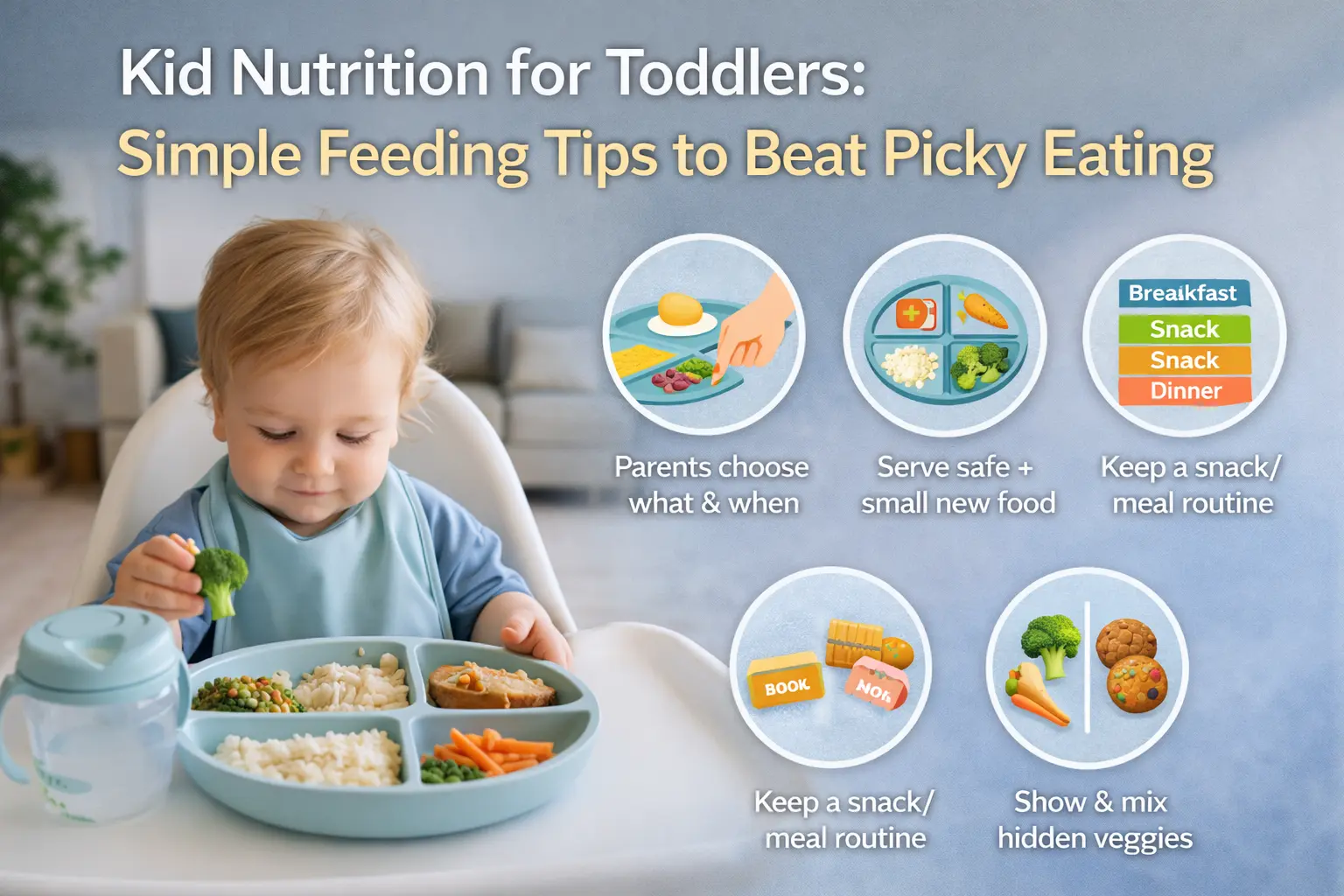
Here’s the rule that saved our mealtimes: Parents choose what and when. Toddlers choose whether and how much.
Why it matters: toddlers are wired to test control. If they feel forced, they push back harder. When you hold the structure (meal times + options) and they hold the decision (how much), you avoid daily food fights.
Step 2: Build meals using “safe + new” (no pressure)
A toddler who is picky usually isn’t being difficult—they’re being cautious. The easiest way to expand food is to pair:
-
One “safe” food you know they’ll eat (pasta, rice, yogurt, toast, fruit)
-
One familiar food they usually tolerate (peas, eggs, cucumber)
-
One tiny “learning” food (a bite-sized portion of something new)
No speeches. No “just try it.” Put it on the plate and move on.
Why it works: repeated low-pressure exposure is how toddlers learn. Sometimes they touch it first. Sometimes they smell it. That still counts as progress.
Step 3: Keep portions toddler-sized (and stop serving “adult plates”)
I’ve seen picky eating get worse when kids feel overwhelmed by a full plate. Start small. You can always offer more.
A simple trick: serve the “learning food” in one or two pieces, not a pile. It looks less scary, and it reduces waste and frustration.
Step 4: Create a predictable meal rhythm (so snacks don’t ruin dinner)
If your toddler grazes all day, dinner will be a struggle. Try a simple rhythm:
-
Breakfast
-
Snack
-
Lunch
-
Snack
-
Dinner
Keep snacks planned—not constant. It’s okay if they don’t eat much at one meal; the next chance is coming soon.
Snack tip that helps picky eaters: treat snacks like mini-meals—protein + fibre—not just crackers. Think cheese + fruit, hummus + pita, yogurt + berries.
Step 5: Use this copyable “mix-and-match” toddler meal table
| Base (carbs) | Protein | Veg/Fruit | Healthy fat / extras |
|---|---|---|---|
| Toast / wraps | Eggs | Cucumber sticks | Butter / avocado |
| Pasta | Chicken pieces | Peas / corn | Olive oil / parmesan |
| Rice | Lentils / beans | Carrot coins | Yogurt dip |
| Oats | Greek yogurt | Banana / berries | Nut/seed butter* |
| Potatoes | Fish fingers (homemade or store) | Frozen mixed veg | Mayo/yogurt sauce |
*Use nut/seed products only if age-appropriate and safe for your child; if allergies are a concern, speak with your clinician.
Why this table works: it reduces decision fatigue. You’re not “inventing meals,” you’re assembling them.
Real-life mistakes I see (and what to do instead)
Mistake: bribing with dessert (“three bites then pudding”).
Fix: dessert becomes the prize and dinner becomes the punishment. If dessert is part of your routine, serve a small portion occasionally without making it a bargaining chip.
Mistake: cooking a separate “kid meal” every night.
Fix: you’ll burn out. Instead, build the family meal and add a safe side (bread, rice, fruit, yogurt).
Mistake: reacting big (cheering, begging, or showing frustration).
Fix: toddlers notice. Keep your tone neutral. The less drama around food, the safer it feels.
Mistake: blaming yourself when they eat “randomly.”
Fix: toddler appetites swing. Look at food over a week, not one day.
Quick checklist for calmer toddler meals
-
Serve 1 safe food at every meal
-
Offer a tiny “learning food” without pressure
-
Keep snacks on a schedule (not constant)
-
Start with small portions and refill if needed
-
Sit together for 10 minutes when possible
-
Water with meals; milk can be earlier/later if it fills them up
Takeaway
Picky eating often improves when meals become predictable and low-pressure. You don’t need perfect recipes—you need a simple structure: safe foods, gentle exposure, steady meal rhythm, and less negotiation. Most importantly, your toddler’s job is to decide how much to eat. Your job is to keep showing up with reasonable options.
FAQs (real parent questions)
Q1. Why is kid nutrition for toddlers important?
Kid Nutrition for Toddlers is important because early eating habits shape long-term health. Calm, structured feeding helps toddlers feel safe and curious about food.
Q2. Is picky eating normal in toddlers?
Yes. Picky eating is very common at this age. Kid Nutrition for Toddlers focuses on reducing pressure rather than forcing children to eat.
Q3. How much food should toddlers eat?
There is no fixed amount. Kid Nutrition for Toddlers works best when children decide how much to eat from the options offered.
Q4. Should parents hide vegetables in meals?
Hiding vegetables can help nutrition, but Kid Nutrition for Toddlers also encourages showing foods openly so children learn to accept them.
Q5. When should parents worry about picky eating?
If picky eating leads to weight issues, choking, or stress at meals, parents should consult a healthcare professional.
Read This Also: Breastfeeding Tips for New Moms: Latch, Milk Supply & Common Mistakes