


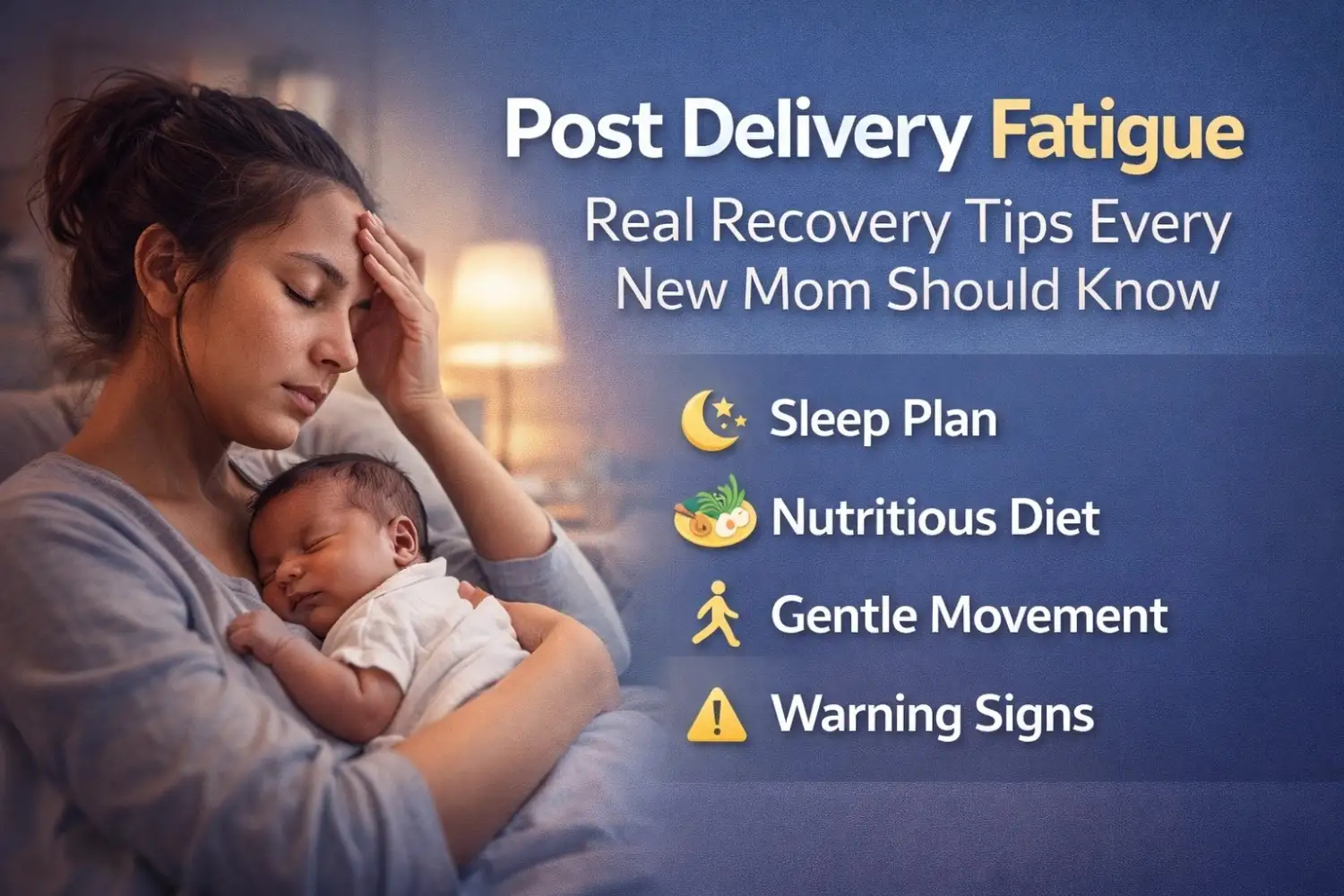
Post delivery fatigue is not the same as “just being tired.” It’s a mix of broken sleep, physical healing, hormonal shifts, and the mental load of caring for a newborn. I’ve seen many new moms (in India and the US) blame themselves for feeling drained—when what they actually need is a calmer recovery plan and fewer “shoulds.”
This guide is for new mothers who feel wiped out after delivery (vaginal birth or C-section) and want practical, safe ways to regain energy without pushing too hard or making recovery slower.
Step 1: Know what “normal tired” looks like vs. when to get help
From experience, the biggest mistake is ignoring red flags because “everyone says it’s normal.” Yes, tiredness is common. But these signs deserve a call to your doctor or midwife:
-
Fever, chills, worsening pain, foul-smelling discharge
-
Heavy bleeding (soaking a pad in an hour), large clots, dizziness
-
Shortness of breath, chest pain, severe headache, vision changes
-
Severe sadness, panic, scary thoughts, or feeling detached from your baby
-
C-section wound redness, pus, opening, or increasing swelling
Why this matters: untreated infections, anemia, thyroid issues, or postpartum mood problems can look like “fatigue,” but need medical treatment.
Step 2: Treat sleep like medicine (not a luxury)
“Sleep when the baby sleeps” sounds good but often fails in real life. What works better is a planned sleep system.
A simple newborn-week sleep workflow
-
Pick one daily “anchor nap” (even 60–90 minutes). Protect it like an appointment.
-
Split nights if possible: one person does 9 pm–2 am, the other 2 am–7 am.
-
If you’re breastfeeding, consider: partner does diaper + burp + resettle while you only feed.
-
If you pump or formula feed, one longer sleep block (3–4 hours) can be a game changer.
Why this matters: one uninterrupted block often improves mood, pain tolerance, milk supply stability, and decision-making.
Step 3: Eat for recovery energy (not weight loss)
In the first few weeks, dieting backfires. I’ve seen moms crash harder because they’re surviving on tea, biscuits, or “quick snacks.”
Recovery plate rule (easy to follow)
-
Protein every time you eat: eggs, dal, paneer, chicken, fish, tofu, Greek yogurt
-
Iron + vitamin C pair: spinach + lemon, jaggery + citrus, meat + salad
-
Hydration with a plan: one bottle near your bed + one where you feed baby
If you had heavy blood loss or feel lightheaded, ask your doctor about checking hemoglobin/iron. Low iron is a very common reason fatigue doesn’t improve.
Step 4: Move gently, but daily
Fatigue can make you want to stay in bed all day. The problem is: complete inactivity can increase body aches, stiffness, constipation, and low mood.
Start tiny:
-
Day 1–7: short indoor walks, 3–5 minutes, 2–3 times/day
-
Add deep breathing and gentle pelvic floor relaxation
-
If C-section: follow your surgeon’s advice; avoid straining and heavy lifting
Why this matters: gentle circulation improves healing and sleep quality without “exercising.”
Step 5: Reduce the hidden workload (the part nobody counts)
New moms often do “invisible work”: tracking feeds, washing clothes, answering relatives, managing visitors. It drains you faster than the baby does.
Common real-life mistakes + fixes
-
Mistake: Trying to host guests.
Fix: Set visiting hours or a “no visitors this week” rule. -
Mistake: Doing chores because “it’s faster if I do it.”
Fix: Accept imperfect help. Give one clear task: “Please do dishes + refill water.” -
Mistake: Skipping pain meds and then not sleeping.
Fix: Take medication as prescribed so you can rest and move comfortably.
A copy-paste recovery checklist (daily)
-
One protected nap (30–90 min)
-
One uninterrupted sleep block (3+ hours if possible)
-
Protein 3 times/day
-
2–3 liters fluid (or as advised)
-
10–20 minutes total gentle walking
-
Fresh air/sunlight for 5–10 minutes
-
Ask for help with 1 specific task
-
Check bleeding, pain, mood (note changes)
Takeaway: recovery improves faster when you stop “pushing through”
Post-delivery fatigue usually eases when you protect sleep, eat for healing, move gently, and reduce the mental load. The goal isn’t to be “back to normal” quickly—it’s to recover steadily without setbacks.
Internal linking idea (for your site): add links to postpartum diet, C-section care, breastfeeding positions, and postpartum depression vs baby blues.
Read This Also: Thyroid Pregnancy Care: Safe Planning, Common Mistakes & Right Steps
Read This Also: iPhone 18 Pro Launch: New Design, Camera, Chip & September Timeline
FAQs (real doubts moms ask)
Q1. What is Post Delivery Fatigue?
Post Delivery Fatigue is deep exhaustion after childbirth caused by sleep loss, hormonal changes, and physical recovery. It is common but should gradually improve with proper care.
Q2. How long does post-delivery fatigue last?
For many women it improves gradually over weeks, but sleep disruption can extend it. If fatigue is getting worse after the first week or feels extreme, ask your doctor to check iron, thyroid, or infection signs.
Q3. How long does Post Delivery Fatigue last?
Post Delivery Fatigue usually improves over a few weeks. If it worsens or feels extreme, medical evaluation is advised to rule out anemia or infections.
Q4. When should I worry about Post Delivery Fatigue?
Seek medical advice if Post Delivery Fatigue comes with fever, heavy bleeding, dizziness, severe sadness, or breathing problems.
Q5. What helps recovery from Post Delivery Fatigue?
Rest, planned sleep, nutritious food, hydration, and gentle movement help manage Post Delivery Fatigue safely.
Q6. Is Post Delivery Fatigue linked to postpartum depression?
Post Delivery Fatigue can overlap with postpartum depression symptoms. Persistent sadness or anxiety should always be discussed with a healthcare professional.
Q7. What are easy foods for exhausted new moms?
Think “minimal effort, high protein”: dal + rice, egg bhurji, dahi + fruit, peanut chikki, soup with paneer/chicken, oats, or khichdi. Keep a small snack box near the bed.
Q8. How do I manage visitors without guilt?
Use one simple line: “Doctor advised rest, we’re keeping visits short.” Most people understand. If not, that’s still okay—your recovery comes first.