

What to Do to Improve Fertility: I’ve met many couples—both in India and the UK—who want to conceive but feel confused by mixed advice online. Some are told to “just relax,” others are pushed toward expensive supplements, and many quietly blame themselves when pregnancy doesn’t happen quickly.
This article is for real people trying to conceive, not for chasing rankings or selling miracle foods. I’m sharing what I’ve seen work in real life: simple, everyday food choices that support fertility, explain why they matter, and point out common mistakes that silently reduce chances of pregnancy.
Food alone cannot fix every fertility issue—but nutrition is one of the few things you can control daily, and it genuinely supports hormonal balance, egg and sperm quality, and overall reproductive health.
First, an honest truth about fertility and food
From experience, I’ve learned three important things:
- There is no single “fertility food” that guarantees pregnancy
- Consistency matters more than perfection
- Good fertility nutrition supports the body—it doesn’t force results
Think of food as preparing the soil, not forcing the seed to grow.
Step 1: Build a fertility-supporting plate (for both women and men)
-
Healthy fats (often ignored, but crucial)
Hormones are made from fat. When people eat very low-fat diets, cycles can become irregular.
Include regularly:
- Ghee (small amount, traditional and helpful)
- Cold-pressed mustard oil or olive oil
- Nuts: walnuts, almonds
- Seeds: flaxseed, pumpkin seeds
Why it matters:
Healthy fats support ovulation, progesterone levels, and sperm quality.
-
Protein that actually helps fertility
I’ve noticed many people either eat too little protein or rely only on refined sources.
Better protein choices:
- Eggs (especially the yolk)
- Dal (mixed dals are better than one type)
- Paneer or curd (if digestion allows)
- Fish (for those who eat it)
- Chickpeas, rajma, soy in moderation
Why it matters:
Protein supports egg maturation, sperm production, and uterine lining health.
-
Iron-rich foods (especially important for women)
Low iron is a very common but ignored issue in people trying to conceive.
Food sources:
- Green leafy vegetables (spinach, moringa)
- Dates, raisins
- Jaggery (better than white sugar)
- Lentils
- Red meat (if culturally acceptable)
Tip from experience:
Always pair plant iron with vitamin C (lemon, amla, orange) for absorption.
-
Foods that support hormonal balance
Hormonal imbalance doesn’t always show in reports, but food can gently support balance.
Helpful foods:
- Whole grains (millets, oats, brown rice)
- Seasonal fruits
- Vegetables of different colors
- Fermented foods (curd, homemade pickles in moderation)
Why it matters:
Stable blood sugar = stable hormones = better ovulation and sperm health.
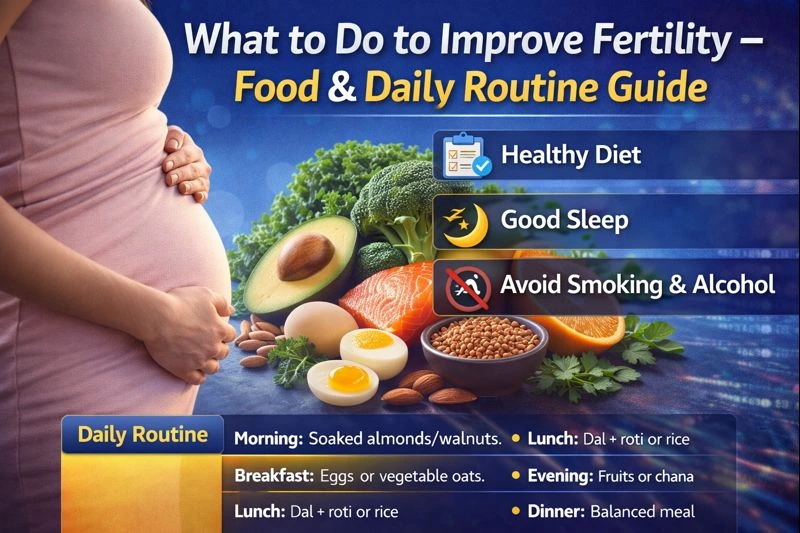
Step 2: A simple fertility-friendly daily food routine
This is a realistic routine, not an ideal one.
| Time | What to focus on |
| Morning | Warm water + soaked almonds/walnuts |
| Breakfast | Eggs / vegetable poha / oats with seeds |
| Lunch | Dal + sabzi + roti or rice + curd |
| Evening | Fruit or roasted chana (not biscuits) |
| Dinner | Light but balanced (avoid very late meals) |
This routine works because it’s repeatable, not fancy.
Step 3: Common mistakes I see (and how to fix them)
Skipping meals to “stay fit”
Fix: Eat regularly; irregular eating confuses hormones.
Excess tea/coffee (especially in the morning)
Fix: Limit to 1–2 cups; avoid on empty stomach.
Overdoing supplements without advice
Fix: Start with food first. Supplements only if advised.
Only focusing on the woman’s diet
Fix: Male fertility matters equally. Both partners should eat well.
Step 4: Foods and habits to reduce (not ban)
I never recommend complete bans, but moderation matters.
- Ultra-processed food
- Excess sugar
- Daily fried snacks
- Alcohol (especially while trying)
- Smoking (strong negative effect on fertility)
Quick fertility nutrition checklist (save this)
- Eat 3 proper meals daily
- Include healthy fats daily
- Get enough protein
- Add iron + vitamin C foods
- Sleep well (food can’t fix poor sleep)
- Both partners follow the plan
Final takeaway
From real observation, fertility improves when the body feels safe, nourished, and stable. Food is not a magic switch—but it is a powerful foundation.
If you’re trying to conceive:
- Focus on steady, nourishing habits
- Avoid extreme diets
- Give your body time (usually 3–6 months of consistency)
Small daily choices add up more than sudden “fertility hacks.”
Read This Also: Thyroid Pregnancy Care: Safe Planning, Common Mistakes & Right Steps
1. What are the most important things to do to improve fertility?
From real observation, what to do to improve fertility starts with basics: regular meals, enough sleep, manageable stress, and avoiding smoking and excess alcohol. These steps support hormone balance and reproductive health without putting pressure on the body.
2. How long does it take for lifestyle changes to improve fertility?
Usually 2 to 3 months. Egg and sperm quality do not improve overnight. When people expect instant results, they often feel discouraged too soon. Consistency over time matters far more than intensity.
3. Does stress really affect fertility?
Yes, and I’ve seen this repeatedly. Even when diet and reports look fine, constant stress can disturb ovulation, cycle regularity, and sperm quality. Part of what to do to improve fertility is learning to slow down, not just add more rules.
4. Is diet alone enough to improve fertility?
Diet is important, but it works best alongside sleep, movement, and emotional balance. Food supports the body, but it cannot override poor sleep, high stress, or extreme fatigue on its own.
5. Should both partners follow fertility-friendly habits?
Absolutely. One common mistake is focusing only on the woman. In real life, improving fertility works better when both partners improve diet, sleep, and daily habits together. Sperm quality responds strongly to lifestyle changes.
6. Are supplements necessary to improve fertility?
Not always. Many people assume supplements are the first step, but from experience, food and routine should come first. Supplements may help in specific deficiencies, but they are not a shortcut and should be used carefully.
7. Can fertility improve even if age is a factor?
Age matters, but it is not the only factor. What to do to improve fertility at any age is to support the body as much as possible—through nutrition, stress control, and consistency—rather than giving up or rushing into extreme measures.