

Before you zero in on a single low AMH treatment, let’s pause for a while to understand a few reasons for your condition. Anti-Mullerian Hormone (AMH) serves as a biomarker for assessing your ovarian reserve. For women trying to conceive, AMH level is a window, peeking into the quantity of eggs remaining. Low AMH levels, typically considered to be below 1.0 ng/mL, are often seen as a warning for dwindled ovarian reserve. This might trouble your relentless efforts of getting pregnant. However, AMH levels should be viewed not as a separate chapter. It is an integral part of a broader, more nuanced story of your wellbeing.
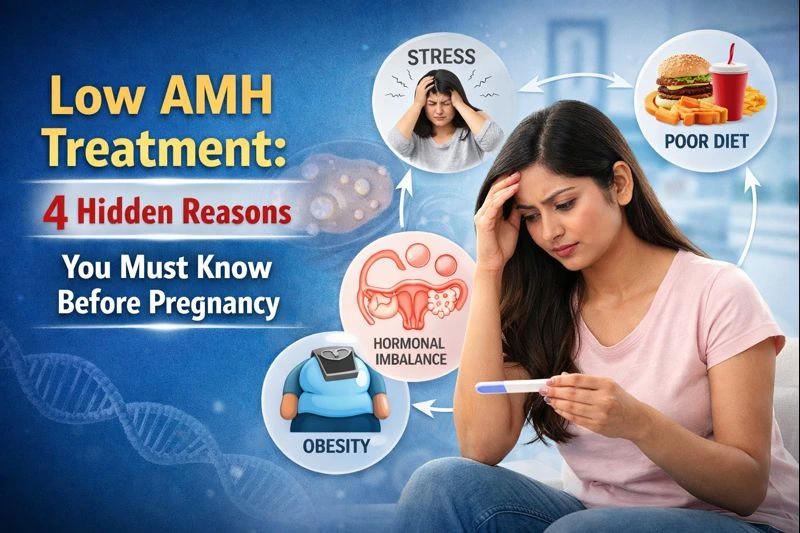
You should consider seeking low AMH treatment in any of these four unlucky situations.
The fourth one is within your control. Let’s proceed.
- When you think about metabolic health, shedding pounds is just one fraction of the entire system.
It’s a reciprocal interplay of hormones, cellular energy, glucose regulation, lipid metabolism, and insulin sensitivity – along with other activities – that determine your AMH levels.
In conditions like PCOS, metabolic dysregulation causes spiked up insulin and androgens. That disrupts your follicular development and fast-track your ovarian aging. The destiny becomes bad AMH levels as time goes by.
Obesity is a real culprit. Obesity is an uncontrolled gathering of adipose tissue, which stores energy as fat. Not just that! Adipose tissue is an active endocrine organ that secretes inflammatory cytokines and hormones like leptin. This process can impair your ovarian function. Don’t misunderstand it to be a passive fat store.
This creates a state of chronic low-grade inflammation and estrogen dominance, eventually leading to suppressed AMH production. This reflects a deeper metabolic disturbance.
Low AMH treatment is all about tackling these underlying malfunctions.
- The hidden traumas brought by autoimmune disorders on reproductive health are also worth discussing.
Conditions like Hashimoto’s thyroiditis, lupus, and autoimmune oophoritis attack the body’s tissues, including the ovaries. For example, autoimmune oophoritis happens when the immune system mistakenly targets ovarian tissue, leading to inflammation and damaging ovarian follicles. This can result in a major drop in AMH.
Autoimmune disorders spoil your hormonal tranquility and speed up ovarian aging. This makes room for premature ovarian insufficiency (POI), where the ovaries lose their purpose much earlier than expected.
- Are you easily stressed out?
Uninterrupted flow of cortisol from chronic stress can inhibit the secretion of gonadotropin-releasing hormone (GnRH). Think of it as the master hormone that initiates the menstrual cycle. This creates a hormonal domino effect, lowering follicle-stimulating hormone (FSH) and luteinizing hormone (LH). Indubitably, these hormones are integral to the complex mechanisms governing ovarian function. Also, the precise regulation of AMH synthesis – as you might already guess.
Moreover, chronic stress increases oxidative stress and inflammation in the ovaries, heightening follicular depletion.
In all of these cases, never resist yourself from going for a low AMH treatment.
- Malnutrition is a severe offense for your body!
Nutrition and fertility always go hand in hand – mind our words. Your ovaries need a steady supply of nutrients like vitamin D (regard fatty fish like salmon), zinc (found in pumpkin seeds), and omega-3s (present in walnuts) to flourish. Missing out on these can fight against quintessential processes like folliculogenesis.
Resist the temptations. Keep yourself far away from refined sugars (like those flavorsome pastries), Trans fats (some margarine), and processed foods (like chips). These criminals can damage ovarian tissue and throw off your hormonal peace. Instead, fill your plate with whole, nutrient-dense foods such as leafy greens, berries, and quinoa.
Experts handling your low AMH treatment will empower you with the all the emerging knowledge and insights good for you.
Not sure where to begin? We realize! Motherly is passionate about breaking down those barriers with you. Come – let’s reimagine your motherhood story. Check out our website for more clarity on how we can do it.